How to Choose a Camping Mobile Toilet in 2026?
Choosing a Camping Mobile Toilet is a small decision with serious comfort and hygiene consequences. A quiet forest campsite can change quickly when no restroom is nearby. Morning cold, uneven ground, limited water, and children needing urgent access all expose weak designs.
The 2024 KOA North American Camping Report recorded 57.8 million camping households in 2023. That figure shows how many people may need practical sanitation beyond developed campgrounds. Outdoor recreation is also becoming more flexible, with road trips, van travel, and remote overnight stays gaining attention. A portable toilet must therefore fit real habits, not only product photographs.
Industry research from Grand View Research describes portable toilets as a growing sanitation category, supported by outdoor recreation and temporary-use demand. However, market growth does not make every Camping Mobile Toilet suitable for every trip. Capacity, seat height, sealing performance, waste-bag compatibility, cleaning effort, and transport weight matter more than glossy specifications. They matter at 6 a.m.
Public-health guidance from the Centers for Disease Control and Prevention emphasizes hand hygiene and safe waste handling during outdoor activities. This article applies that principle to product selection. It examines toilet structure, odor control, privacy, durability, disposal planning, and user comfort. It also considers standards and manufacturer instructions, because “flushable” does not always mean convenient in a remote campsite.
No model is perfect. I may value compact storage too highly in one situation. Another camper may prioritize stability or child-friendly height. The best choice depends on group size, trip duration, campsite facilities, and realistic cleaning habits. Use this guide to compare those details carefully before paying for a portable solution that looks impressive but performs poorly outdoors.
Define Trip Demand Using Users, Nights, and 10–20 L Waste-Tank Capacity
A camping mobile toilet should match real use, not optimistic guesses.
The 2024 North American Camping Report recorded 57.8 million camping households in 2023. More campers also mean more varied trip lengths, from one-night stops to weeklong stays. Count users and nights before comparing features.
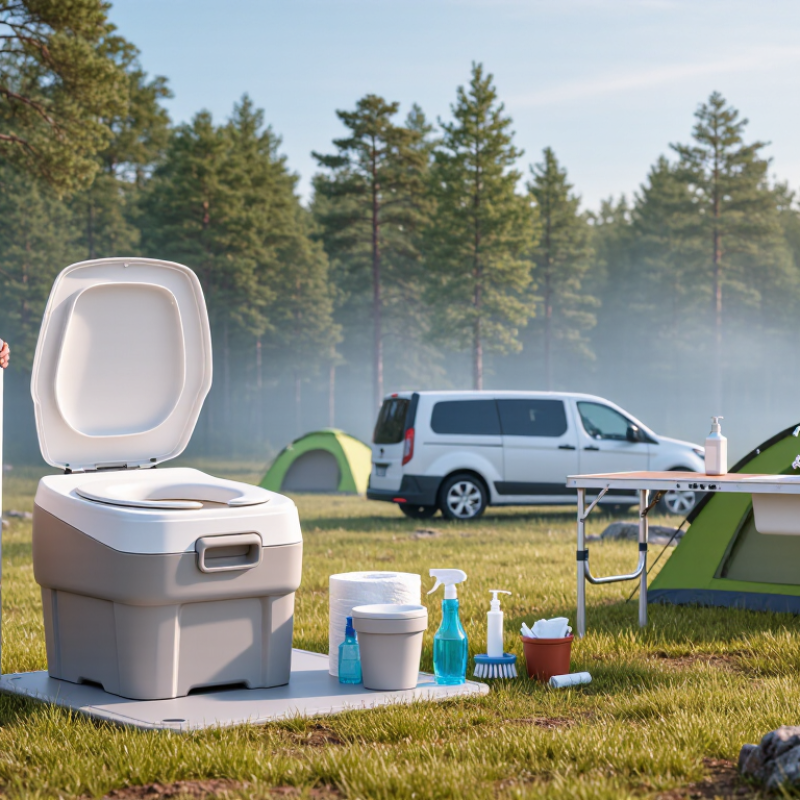
A practical planning estimate is 1–2 liters of waste and flushing liquid per person each day. It varies with diet, hydration, temperature, and toilet design. Two adults camping for two nights may need 4–8 liters. A 10-liter tank could work, but it leaves little margin for children or limited disposal access. For four people over three nights, a 20-liter tank may still feel tight.
The calculation is simple:
users × nights × estimated daily volume
Do not trust capacity alone; usable capacity is often lower than the advertised figure.
Tips:
Add a 20–30% buffer for uncertain conditions. Check tank weight when full, because transport becomes harder quickly. Choose a stable seat, sealed waste port, clear level indicator, and replaceable liners only when appropriate. Public-health guidance from the World Health Organization emphasizes safe containment and hygienic handling, not merely convenience. I have found that a smaller toilet can be easier to carry, yet poor capacity planning creates unpleasant interruptions. My estimate may also be conservative; heavy fluid use can exceed it. Think about disposal points before departure.
Verify Portable-Toilet Safety Against EN 16194 Mobile-Sanitation Standards
How to Choose a Camping Mobile Toilet in 2026?
Verify Portable-Toilet Safety Against EN 16194 Mobile-Sanitation Standards
A camping toilet should be judged by construction, hygiene, and documentation—not appearance alone. EN 16194 mainly covers mobile, non-sewer-connected toilet cabins and related services. Therefore, it may not directly certify every small camping toilet. Ask the seller to explain which requirements apply to the specific model.
Check the base on level ground. It should resist rocking when someone sits down. Look for smooth, washable surfaces, secure hinges, and a lid that closes without pinching fingers. The waste tank needs enough capacity for your planned trips. A clear fill indicator can prevent unpleasant surprises. Ventilation also matters, especially inside a warm tent or vehicle. Do not guess.
Request safety instructions, cleaning procedures, and material information. Reliable documentation should identify safe chemicals, water limits, and disposal guidance. It should also describe how leaks are prevented during transport. A compliance statement is useful, but it is not the same as independent testing. Read the wording carefully.
I once overlooked the carry handle and focused only on tank size. That was a poor choice. A full tank becomes heavy quickly. Test the handle, latches, and emptying process before purchase. If the documentation uses vague phrases such as “standard quality,” ask for the exact EN 16194 reference or an honest explanation that the unit sits outside the standard’s full scope. Safety depends on details.
Compare Cassette, Bucket, and Composting Systems by Waste-Handling Method
A camping toilet should be judged by its waste-handling method, not its seat height. The 2024 North American Camping Report recorded 57.8 million camping households in 2023, showing why practical sanitation matters outdoors. A cassette toilet stores waste in a sealed, removable tank. It feels closest to a household toilet, but the tank becomes heavy quickly. You need an approved disposal point and careful rinsing.
A bucket toilet is simpler. Waste falls into a lined container, often with absorbent material. It is inexpensive and easy to repair. However, odor control depends on daily handling, tight liners, and warm-weather discipline. The U.S. Environmental Protection Agency reports that toilets use nearly 30% of indoor household water, so waterless designs can reduce water demand. That figure does not measure camping directly, but it gives useful context. Bucket systems still create frequent solid waste.
Composting toilets separate liquid from solids and use airflow, drying, and long holding times. They reduce carrying water, but they are not maintenance-free. Ventilation must work, and the solids chamber needs enough capacity for the trip. NSF/ANSI 41 provides performance criteria for non-water-carriage toilet systems, though certification does not replace campsite rules. The 2023 WHO/UNICEF Joint Monitoring Programme report found that only 57% of people used safely managed sanitation globally in 2022. Outdoor disposal should therefore be planned, not improvised. I have found that “composting” is sometimes overstated; short trips rarely produce finished compost.
How to Choose a Camping Mobile Toilet in 2026?
Compare Cassette, Bucket, and Composting Systems by Waste-Handling Method
The chart compares representative waste-container capacities for common portable toilet designs. Cassette toilets collect waste in a removable sealed tank, bucket toilets use a simple pail that is often paired with a liner, and composting toilets separate or process liquid and solid waste in different compartments. Typical capacities vary by design, so these figures should be used as practical reference points rather than brand specifications.
Evaluate Hygiene Features Against CDC’s 20-Second Handwashing Guidance
How to Choose a Camping Mobile Toilet in 2026?
A camping toilet should support clean habits, not merely manage waste. The CDC recommends washing hands with soap and clean, running water for at least 20 seconds. Keep that standard visible when comparing toilet designs. A stable seat, tight lid, and splash-resistant bowl can reduce contact with contaminated surfaces. Smooth, easy-to-wipe materials also matter around the seat hinges and waste opening. Those small areas often collect residue.
Look for a toilet that separates users from waste during emptying. A secure seal can limit odors and accidental spills. However, no seal replaces careful hand hygiene. Pack a dedicated handwashing container with a spout, liquid soap, and disposable or clean reusable towels. Place it within a few steps of the toilet, not across the campsite. A waterless sanitizer is useful when washing is temporarily impossible, but it should not become an excuse to skip soap and water.
Test the setup before leaving home. Sit on it, check its balance, and practice cleaning it while wearing gloves. I once assumed a compact design would be easier, but its narrow opening made cleaning awkward. That was a poor assumption. Capacity labels can also mislead because real use depends on temperature, waste type, and trip length. Choose washable surfaces, accessible parts, and a handwashing routine that feels practical at night. Clean hands are the real performance measure.