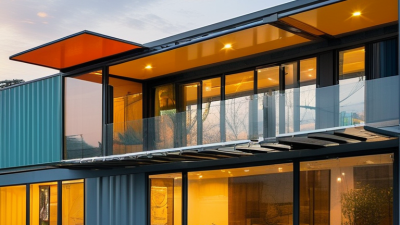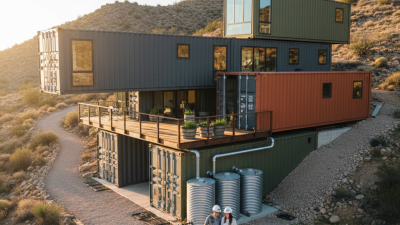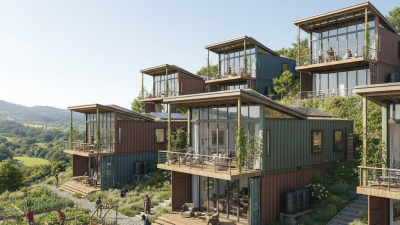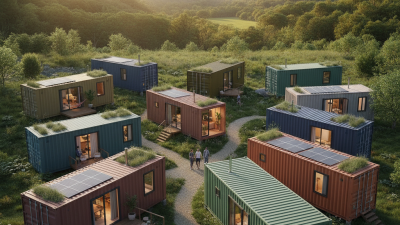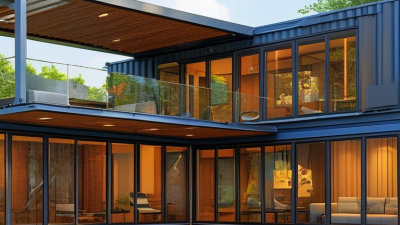
The question behind “2026 Best Sea Can Homes for Global Buyers?” is not simply about attractive designs. It is about safety, climate performance, transport access, and long-term value. Sea Can Homes can offer compact living with strong structural potential. However, a steel box does not become a comfortable home automatically.
Architect and container-home pioneer Adam Kalkin once said, “A container is not a home until people make it one.” That idea remains important for international buyers. Good design should respond to humid coastlines, freezing winters, high winds, salt corrosion, and limited local services. It should also allow practical plumbing, reliable insulation, safe electrical systems, and sensible emergency exits.
The strongest Sea Can Homes in 2026 will likely combine modular efficiency with regional craftsmanship. Buyers may compare factory-built models from North America, Europe, Asia, and Oceania. Yet shipping distance can change the final price dramatically. A low advertised cost may exclude foundation work, permits, cranes, utility connections, or interior finishing.
Details matter. Check weld quality, insulation thickness, ventilation, window ratings, and roof drainage. Ask for engineering documents and a clear warranty. Confirm whether the builder has completed projects in a similar climate. No global ranking is perfect. A beautiful model may perform poorly near the sea, while a plain design may remain cooler, quieter, and easier to maintain.
This guide examines leading Sea Can Homes through a practical lens. It considers build quality, livability, sustainability, delivery complexity, and buyer support. Expectations should remain realistic. Steel can be durable, but careless detailing can invite heat, condensation, and corrosion.
Sea can homes begin with a technical fact: ISO 668 defines standard container dimensions, not residential quality. Common units measure about 6.06 meters long or 12.19 meters long. Both are about 2.44 meters wide. High-cube models add roughly 30 centimeters of interior height. That extra space helps with insulation, lighting, and ventilation.
Most sea cans use weathering steel walls, reinforced corner castings, and marine-grade plywood floors. These materials are strong, but they are not automatically comfortable or healthy for living. Inspect rust around the roof, floor edges, door seals, and corner posts. Check previous cargo use, too. A clean appearance can hide chemical odors or water damage. Certification plates help confirm dimensions and handling history, but they do not replace a professional inspection.
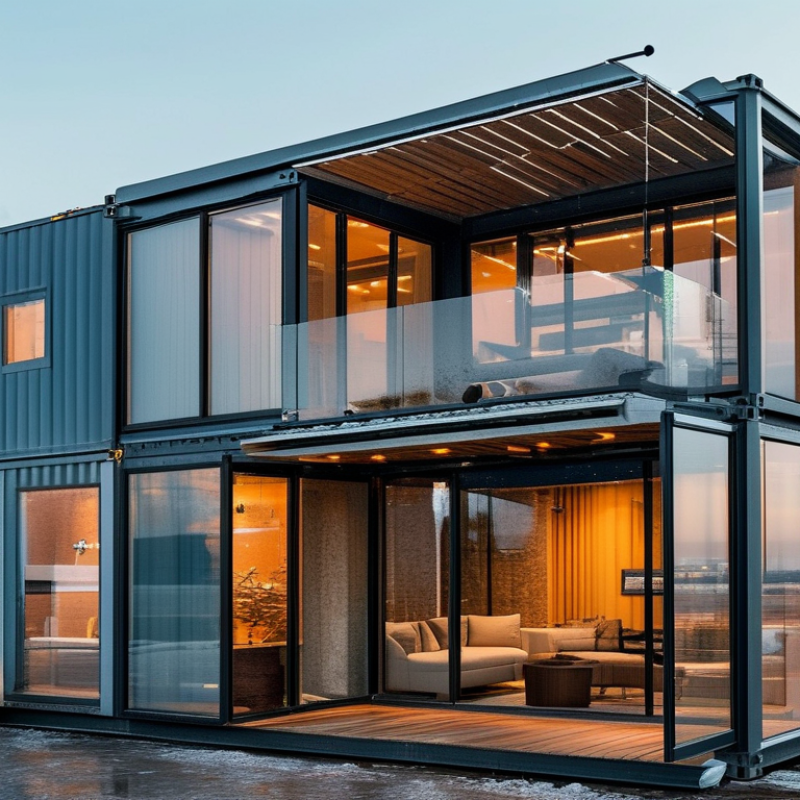
Modular types vary by layout. A single-container home suits a compact studio or guest room. Side-by-side units create wider living areas. Stacked modules can form two-level homes, but they need engineered connections and stable foundations. Hybrid designs combine containers with timber, glass, or insulated framed sections. This often improves daylight and thermal performance. In hot, cold, or coastal regions, climate design matters more than the steel shell. The first sketch is often wrong. Transport access, crane reach, local approvals, and drainage can change the entire plan. ISO sizing simplifies planning, yet it does not guarantee affordable construction. A qualified engineer should verify structural cuts, insulation, fire safety, and foundation loads before fabrication.
Cost per square meter should lead every comparison. In 2025, international quantity-surveying reports placed completed modular housing near US$1,500–3,500 per square meter. That range usually excludes land, permits, transport, cranes, and difficult foundations. Sea can conversions may look cheaper initially. Insulation, corrosion treatment, plumbing, and interior finishing can reverse that advantage. Ask for a full installed cost.
Cost matters.
Lifespan depends more on maintenance than steel thickness. Industry container guidance often cites roughly 10–12 years in demanding shipping service. A carefully modified home can serve for 25 years or longer, but only with drainage, repainting, and regular rust inspections. Openings cut into walls need engineered reinforcement. I would treat any universal lifespan promise with caution.
Energy ratings reveal the real difference. The International Energy Agency reported that buildings used about 30% of global final energy in 2022. A well-designed sea can home needs continuous insulation, thermal breaks, shaded glazing, and airtight joints. In Europe, energy certificates commonly use an A-to-G scale under building-performance rules. Buyers elsewhere should request modeled annual energy use, not just an attractive label. The 2023 Global Status Report for Buildings and Construction also stresses stronger efficiency performance. A small heat pump helps, but poor detailing still creates cold floors and condensation. That weakness is easy to miss.
For global buyers, a sea can home is not automatically a legal home. The International Convention for Safe Containers, or CSC, mainly governs container safety during international transport. It covers structural strength, lifting points, doors, and inspection records. A valid CSC plate helps confirm transport readiness. It does not replace a residential building permit. The UNCTAD Review of Maritime Transport 2024 reports that ships carry over 80% of global trade by volume, showing why transport compliance matters before conversion.
Inspect the corner posts, underside, floor, and welds carefully. Salt exposure can hide corrosion beneath fresh paint. Ask for the CSC plate, inspection history, material records, and lifting plan. Cutting large openings may change load paths. Welding may also require engineering approval. These details are easy to underestimate.
Local building codes control the finished dwelling. Requirements commonly cover foundations, wind loads, flood elevation, fire separation, insulation, ventilation, electrical work, plumbing, and emergency exits. The 2024 International Energy Efficiency provisions also push projects toward stronger thermal performance. Permit rules differ between cities, even within one country. A coastal site may require a geotechnical report and storm-resistant anchoring. A qualified local engineer should review drawings before purchase. Sometimes the container is sound, but the site is not. That is an expensive lesson. One uncertainty remains: converted units may need additional inspection after major structural changes, so buyers should confirm this directly with the local authority and an authorized inspection body.
For global buyers, a sea can home is rarely a cheap shortcut. Land, drainage, permits, and utility connections decide the real budget. In southern Portugal and coastal Spain, serviced plots may cost roughly €80,000 to €250,000, depending on distance from towns. The climate is generally mild, but drought, wildfire, and summer water restrictions deserve serious attention. Grid power and municipal water are often available near established settlements. Remote plots can change the calculation quickly.
Mexico’s Yucatán coast and parts of Belize can offer lower land prices, sometimes $25,000 to $120,000 for modest inland parcels. Prices vary sharply after road access and title checks. Heat, hurricanes, corrosion, and seasonal flooding raise construction and insurance concerns. Electricity may stop at the nearest road, not the property boundary. Rainwater storage and backup power help, but they add maintenance. I would not treat a low listing price as evidence of value.
Australia’s northern coast and selected Gulf Coast areas provide strong utility networks, yet climate exposure is higher. Flood maps, wind ratings, and evacuation routes must be checked before choosing a site. In some United States coastal counties, land can seem affordable below $100,000, while flood-resistant foundations and connection fees exceed expectations. A container shell is durable, but it is not automatically a safe home. Local engineers, surveyors, and planning offices should verify soil, setbacks, sanitation, and insurance terms. My comparison remains provisional; land prices change, and utility promises are sometimes less precise than buyers expect.
| Rank | Region | Indicative Rural Land Price USD per acre |
Typical Climate | Main Climate Risks | Annual Rainfall Approx. |
Utility Access | Typical Distance to Existing Utilities | Planning and Permit Considerations | Sea Can Suitability |
|---|---|---|---|---|---|---|---|---|---|
| 1 | South Island, New Zealand | US$5,000–US$25,000 | Temperate; cool winters and mild summers | Earthquakes, river flooding, strong winds, coastal erosion | 600–2,000 mm | Good in settled districts | 0.1–2.0 miles in developed rural areas | Building consent, insulation, seismic design, wastewater approval, and site access are commonly required. | Strong option for buyers prioritizing moderate temperatures and established infrastructure. |
| 2 | Alentejo and Central Portugal | US$8,000–US$35,000 | Mediterranean; hot, dry summers | Wildfire, drought, heatwaves, flash flooding | 450–900 mm | Moderate | 0.2–2.0 miles near villages; farther on agricultural land | Land-use classification is critical. Habitation, septic systems, water supply, and exterior appearance may need local approval. | Good where shaded design, fire-resistant materials, water storage, and cooling are included. |
| 3 | Atlantic Canada: New Brunswick and Nova Scotia | US$2,000–US$15,000 | Cool temperate; snowy winters | Extreme cold, snow and ice loads, coastal storms, wildfire | 900–1,500 mm | Moderate to good | 0.1–2.0 miles near communities | High insulation, frost-protected foundations, approved heating systems, septic permits, and winter road access are important. | Cost-effective for buyers comfortable with winter construction and heating requirements. |
| 4 | Regional New South Wales and Victoria, Australia | US$4,000–US$25,000 | Temperate to semi-arid | Bushfire, drought, heatwaves, flash flooding | 350–900 mm | Moderate | 0.2–3.0 miles outside regional towns | Bushfire construction standards, planning consent, wastewater approval, water storage, and elevated fire-risk requirements may apply. | Suitable when the site has defensible space, fire-resistant cladding, and reliable water storage. |
| 5 | Inland Uruguay | US$3,000–US$18,000 | Humid subtropical to temperate | Drought, severe thunderstorms, wind damage, localized flooding | 900–1,300 mm | Moderate | 0.2–2.0 miles near established settlements | Verify rural residential rights, electricity availability, water source, wastewater rules, and road access before purchase. | Good value for buyers seeking larger plots, but utility connection costs can vary substantially. |
| 6 | Inland Valencia and Andalusia, Spain | US$6,000–US$30,000 | Mediterranean; hot and dry summers | Water scarcity, wildfire, heatwaves, flash flooding | 250–700 mm | Moderate | 0.3–3.0 miles on rural plots | Non-urban land may not permit permanent residence. Confirm municipal planning status, water rights, access, and wastewater approval. | Attractive for solar-oriented designs, but water availability and legal buildability require careful due diligence. |
| 7 | Inland Arizona and New Mexico, United States | US$2,000–US$15,000 | Arid or semi-arid; very hot summers | Extreme heat, drought, flash floods, dust storms, water limitations | 150–400 mm | Low to moderate | 0.5–5.0 miles; remote parcels may be farther | Check groundwater rights, well feasibility, septic approval, access easements, zoning, and county rules for container structures. | Best for off-grid specialists; cooling, insulation, water storage, and flood-safe siting are essential. |
| 8 | Texas Gulf Coast and Lower Gulf Plain, United States | US$5,000–US$35,000 | Humid subtropical; hot summers | Hurricanes, storm surge, coastal flooding, extreme heat, tornadoes | 900–1,500 mm | Good near towns; variable in remote areas | 0.1–1.5 miles near developed roads | Flood-zone designation, wind-resistant engineering, elevation, drainage, septic approval, and local building permits are major considerations. | Practical where utilities are nearby, but coastal and flood exposure can significantly raise construction costs. |
How to read the table: The ranking weighs land affordability, climate resilience, utility availability, and the practicality of obtaining residential approval for a sea can home.
Land prices: Indicative rural asking-price bands in U.S. dollars per acre for broadly comparable non-prime land. Actual prices vary by zoning, road frontage, water rights, topography, proximity to towns, and parcel size. They are not guaranteed purchase prices.
Utility access: “Good” means electricity, roads, cellular coverage, and public or private water systems are commonly available nearby. A nearby utility line does not guarantee a low-cost connection.
Important for global buyers: Before purchasing, confirm foreign-buyer rules, land-use classification, permanent-residence eligibility, flood and wildfire maps, water rights, septic feasibility, container-home building standards, and local planning approval.
Reference framework: Climate-risk categories are consistent with widely used national hazard maps and international climate-risk assessments; rainfall figures are broad regional climatological ranges rather than property-specific measurements.
For global buyers, a sea-can home’s price starts before construction. UNCTAD’s Review of Maritime Transport 2024 describes continued volatility in container shipping costs. A 40-foot unit may face ocean freight, port handling, customs clearance, inland trucking, cranes, and insurance. These charges can exceed the shell’s advertised price. My early spreadsheet missed crane access. That mistake added nearly 12% to the installation budget.
Transport risk needs a location-specific estimate. Request quotes for the full route, not only the ocean leg. The World Container Index recorded sharp rate swings during 2024 disruptions, proving that timing matters. A delayed shipment can also create storage charges and temporary accommodation costs. Keep a 15% contingency reserve. It may still be insufficient.
Financing can be harder than expected. The Federal Reserve’s 2024 Senior Loan Officer Opinion Survey reported tighter lending standards for many residential loans. Some lenders may classify a container home as manufactured or unconventional housing. That classification can change the deposit, interest rate, and insurance requirements. ROI is not a promise. Resale value depends on land ownership, planning approval, insulation quality, and local buyer confidence. Industry housing data consistently shows that location and legal permanence influence resale more than unusual design. A realistic model should compare net rental income, maintenance, taxes, financing, vacancy, and resale costs. A spreadsheet showing 10% annual returns may be attractive, but small cost errors can reduce it below 5%.
Estimated five-year economics for a 40-foot high-cube container home in three buyer scenarios. Values are in USD per completed unit.
The model includes a used container, professional conversion, delivery and handling, basic site preparation, and estimated financing cost based on 70% financing at an 8% fixed APR over five years. The five-year ROI is calculated as (estimated resale value − all-in ownership cost) ÷ all-in ownership cost.
Planning estimates exclude land purchase, permits, taxes, utility connection charges, insurance, rental income, and extraordinary foundation or climate-control requirements. Actual costs vary significantly by country, distance from port, local building rules, and resale demand.